After the storm: what to do about your roof before you do anything else
Most wind and hail damage is invisible from the driveway. Here is what actually matters in the days after severe weather — and how to get a straight answer without committing to anything.
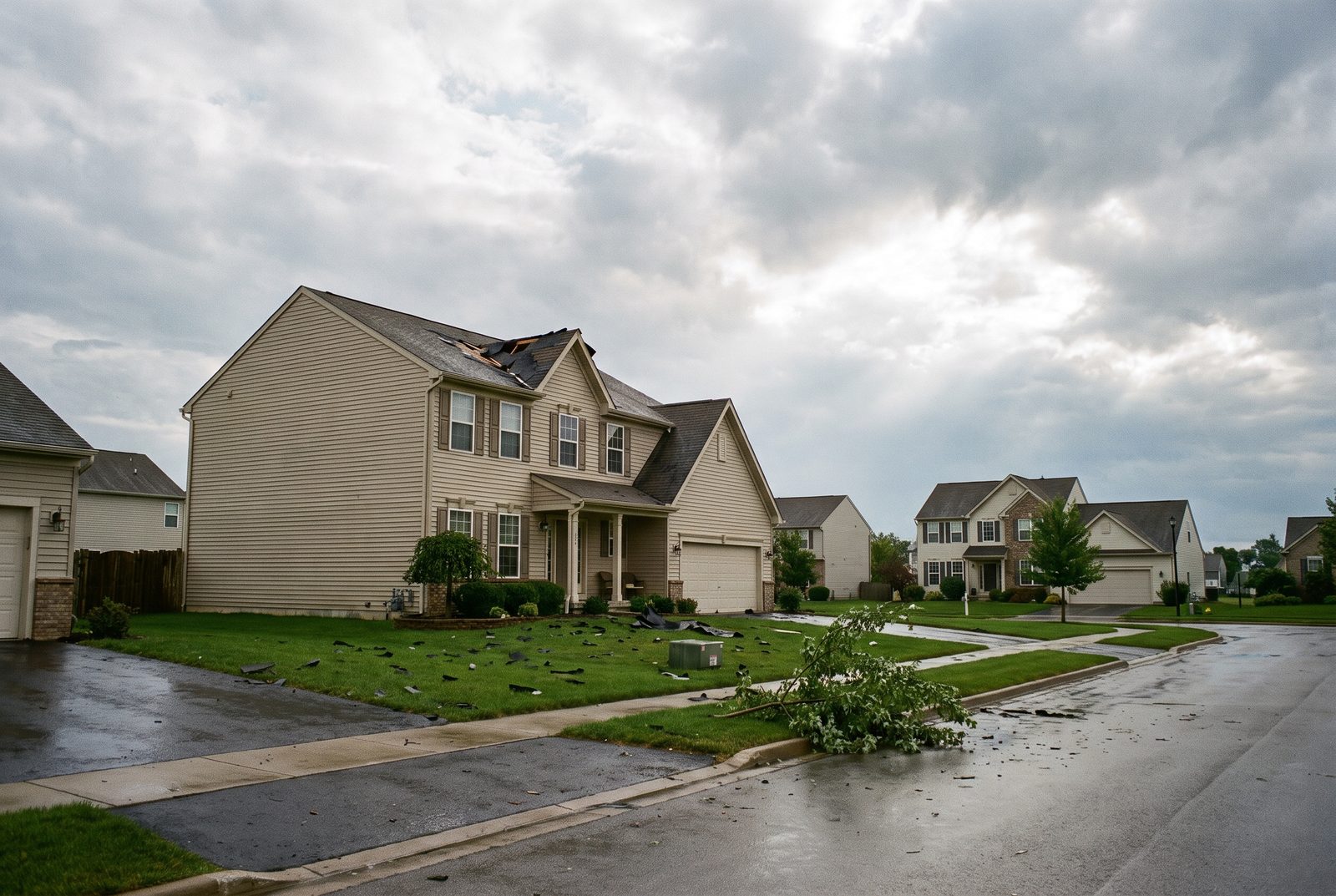
The morning after a storm, most people walk out to the end of the driveway, look up at the roof, decide it looks fine, and go to work. That is a reasonable thing to do and it is also how the majority of storm damage goes unaddressed until it turns into something more expensive.
The problem is one of vantage point. A roof is designed to be looked at from below, from forty feet away, at an angle that hides almost everything that matters. Lifted shingles lie back down. Hail bruising does not break the surface — it knocks the protective granules loose and shortens the life of the shingle by years without leaving a hole. Sealant strips fail silently. From the ground, a roof that has lost a meaningful portion of its remaining service life looks identical to one that has not.
What actually happens in a wind or hail event
Wind damage tends to concentrate along edges, ridges and any place where the roof plane changes direction. Once a shingle's seal is broken, it can lie flat and look completely normal while allowing water underneath it in the next ordinary rainstorm. That is the failure mode that produces a ceiling stain months later, long after anyone has connected it to the weather event that caused it.
Hail is different. It rarely punches through. What it does is impact the surface hard enough to dislodge the granule layer that shields the asphalt from ultraviolet light. The shingle keeps working. It simply ages faster from that day forward. This is why a roof can pass a casual look and still have lost a significant share of its remaining life.
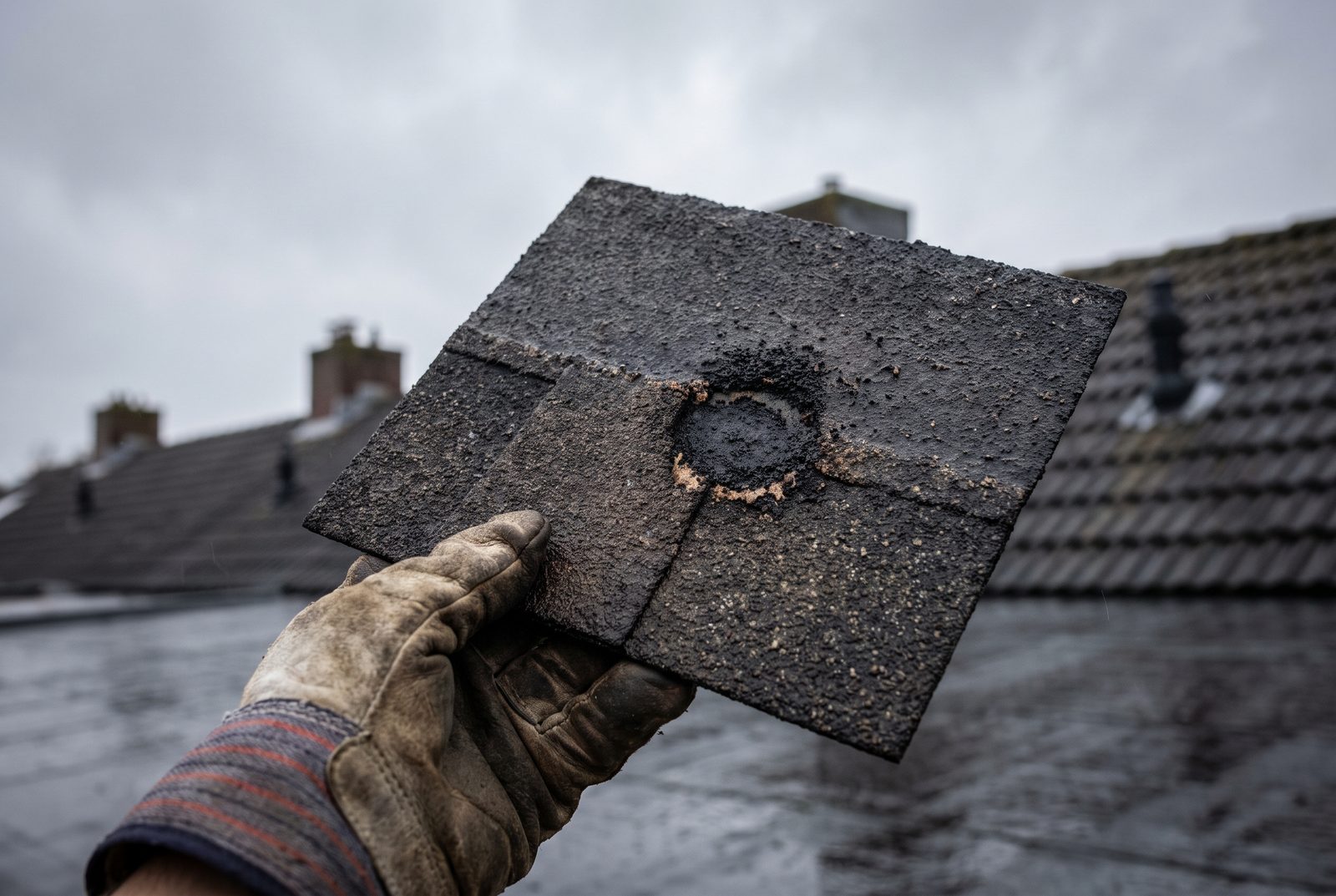
- An inspection is not a commitment. A competent crew will photograph what they find and leave you with the images whether or not you hire them.
- Not every storm produces damage worth acting on. Sometimes the honest answer is that the roof is fine.
- Documentation matters more than speed. Photographs taken close to the event are more useful than a memory of the weather months later.
The out-of-town problem
Severe weather brings crews from outside the area, sometimes from several states away. Some are competent. The structural issue is not skill — it is duration. A roof installed by a company that has left the region by the following spring comes with a workmanship warranty that is, in practical terms, unenforceable. If something goes wrong in year two, there is nobody local to call.
The question worth asking is not whether a crew can do the work. It is whether they will still be reachable when the work needs standing behind.
A licensed local contractor carries the same obligations plus a fixed address, a local reputation and a licence tied to the state you live in. That is the entire difference, and after a major weather event it is the difference that matters most.
What a proper inspection covers
An inspection worth having is a physical one. Someone gets on the roof. The useful ones cover:
- Field shingles, checked for granule loss, bruising and impact marks across each roof plane
- Ridge and hip caps, which take the highest wind loading and fail first
- Flashing at chimneys, walls and valleys — where most genuine leaks originate
- Seal integrity along shingle edges, which is what determines whether wind gets underneath
- Gutters and downspouts for accumulated granules, an early indicator of hail exposure
- Attic and ceiling planes where accessible, for moisture that has already made it through
- Photographic documentation of anything found, handed to you regardless of outcome
What it should not include is a financing presentation at your kitchen table. An inspection is a diagnostic. If the person who climbs your roof comes down with a contract instead of photographs, that tells you what the visit was actually for.

Repair, replace, or leave it alone
All three are legitimate outcomes. A roof in its first decade with isolated wind damage is usually a repair. A roof approaching the end of an asphalt service life with widespread granule loss is usually a replacement conversation. A roof that took a storm and came through it is a roof you should be told to leave alone.
The honest version of this business involves saying the third one out loud reasonably often. If you have never heard a roofer tell you nothing needs doing, that is worth noticing.
Common questions
Does an inspection cost anything?
No. The inspection described here is free and carries no obligation. You keep the photographs either way.
How long does it take?
Typically under an hour for a standard residential roof, including the walk-around and the write-up.
Do I need to be home?
It helps but is not always required. The exterior assessment can be completed without interior access, though attic checks obviously cannot.
What if the roof turns out to be fine?
Then you have documentation and a date, which is genuinely useful to have on file. There is no charge and no follow-up obligation.
Who actually comes out?
A licensed, insured contractor serving your specific area. Coverage varies by location, which is why the form asks for a postcode.